
Hugo Klein · 29 October 2026
Rethinking Content Organization Tactics to Preserve Index Integrity During System-Wide Updates
System-wide updates in large digital platforms often trigger shifts in how content gets crawled and stored within search indexes, which creates risks for visibility and retrieval accuracy when structures change abruptly. Observers note that organizations have begun experimenting with modular content blocks instead of rigid hierarchies, allowing individual sections to update independently while preserving overall index signals. Research from academic institutions shows that such approaches reduce the chance of crawler disorientation during transitions, because each block carries its own metadata tags that remain consistent even as surrounding elements shift.
Mapping Content Relationships Before Major Changes
Teams preparing for platform reconfigurations typically start by building detailed relationship maps that track how individual pages connect through internal links, structured data, and shared taxonomies. These maps help identify which content clusters share indexing dependencies, so adjustments can occur in controlled sequences rather than all at once. Data from industry reports indicates that platforms using pre-update mapping experienced fewer drops in indexed pages compared with those applying changes without such preparation, particularly when updates rolled out in October 2026 across multiple enterprise systems.
One documented case involved a content management overhaul where experts grouped related articles into dynamic clusters that referenced each other through stable identifiers. This method allowed the system to propagate updates gradually, keeping crawler paths intact while new versions replaced older ones in the background. What's interesting is how these clusters also incorporated version-specific signals that told indexing systems which content represented the current state without invalidating historical entries.
Integrating Structured Data for Continuity
Structured data plays a central role when organizations seek to maintain index integrity, because it provides explicit signals about content purpose and relationships that crawlers can follow reliably. Studies from research bodies across different regions reveal that embedding schema markup at the block level rather than the page level helps isolate changes, preventing one updated section from affecting the indexing status of unrelated material. European digital standards documentation highlights examples where consistent use of such markup during infrastructure shifts preserved ranking positions for core topics even as site architectures evolved.
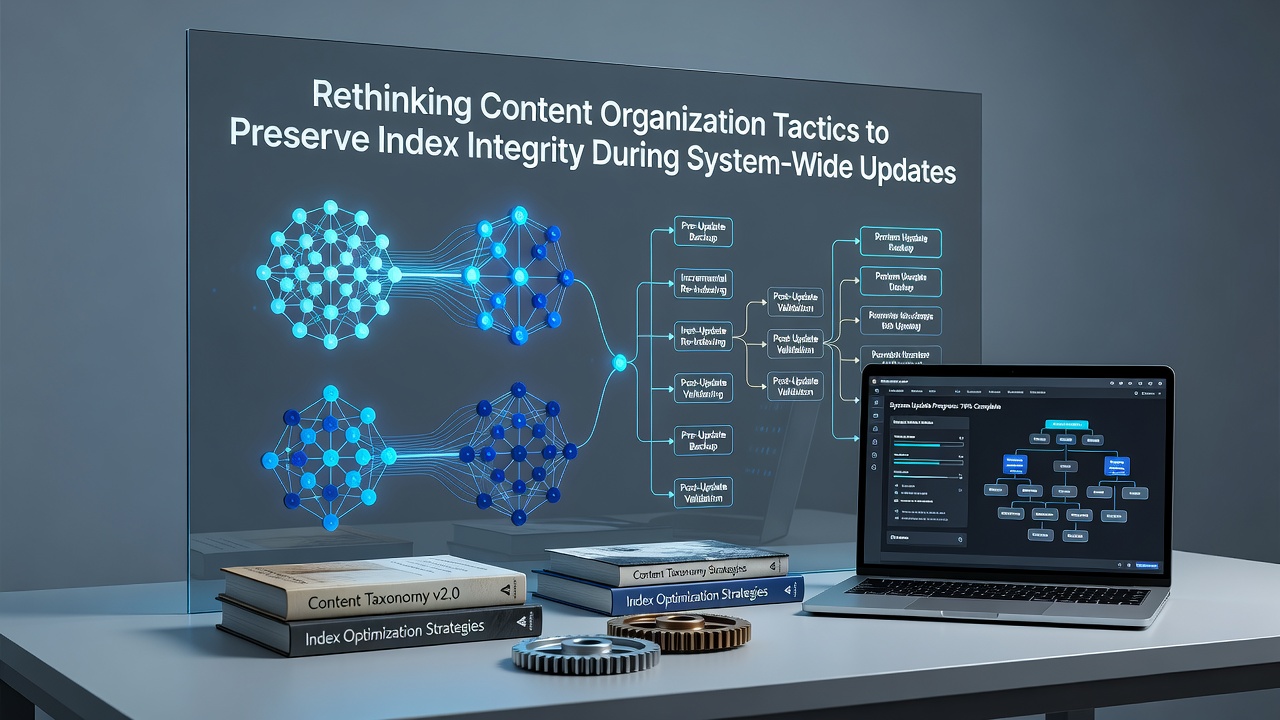
Practitioners have also combined structured data with API-driven content delivery, which separates the presentation layer from the underlying indexable elements. This separation means updates to visual design or navigation do not automatically trigger full re-crawls of every associated URL. Figures from technology research groups show measurable improvements in index retention rates when organizations adopted these layered tactics ahead of scheduled platform migrations.
Testing and Phased Rollouts
Phased rollouts have become standard practice because they allow monitoring of index behavior in real time before full deployment. Researchers discovered that running parallel index tests on staging environments equipped with representative content samples helped surface potential integrity issues early. In one instance, a North American enterprise used these tests to refine redirect patterns and canonical tags, ensuring that updated content retained its established indexing authority without creating duplicate entries.
Those who've studied large-scale transitions emphasize the value of monitoring crawl budgets during each phase, because sudden increases in new or changed URLs can strain indexing resources if not managed carefully. Organizations that tracked these metrics alongside their content reorganization efforts reported smoother transitions, with fewer instances of pages temporarily dropping from indexes.
Conclusion
Effective content organization during system-wide updates relies on combining relationship mapping, structured data at granular levels, and controlled rollout sequences to keep indexing systems stable. Evidence from multiple studies and platform implementations continues to guide refinements in these tactics as digital environments grow more complex.