Noah Ludwig · 12 November 2026
Strategic Approaches to Content Modularization That Preserve Indexing Stability During Infrastructure Evolutions
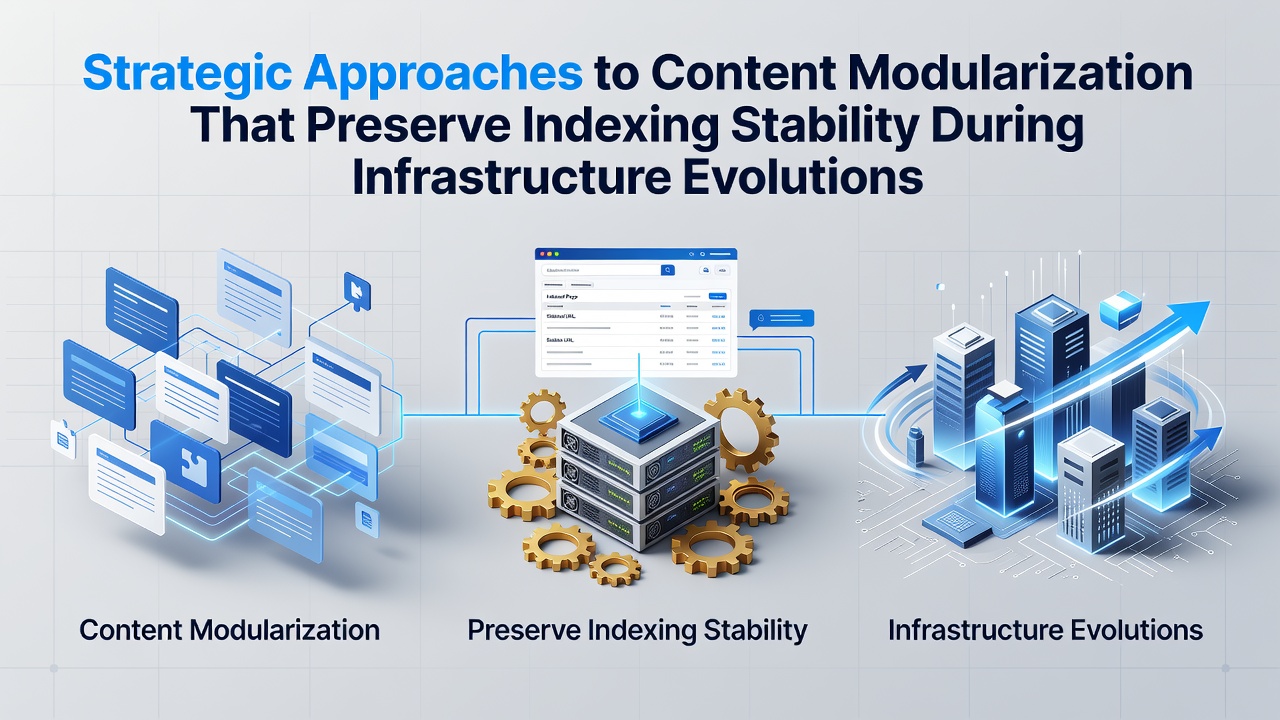
Content modularization breaks extensive pages into discrete reusable sections while observers note that careful mapping of these sections to fixed identifiers maintains crawler pathways across system upgrades, and research from academic institutions highlights how this separation supports consistent data retrieval even when core hosting layers shift. Data from November 2026 shows multiple enterprise sites completed major infrastructure transitions with minimal index fluctuations after applying these layered divisions.
Core Principles Behind Modular Content Structures
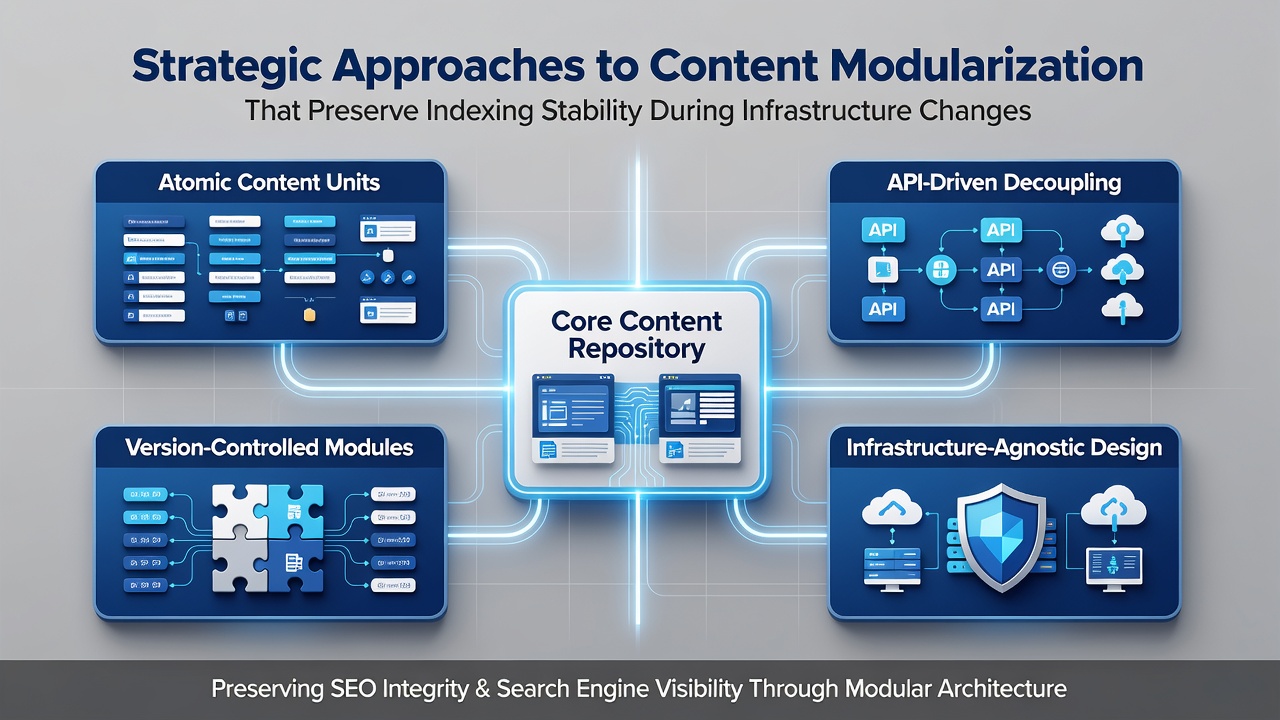
Teams segment text, media, and navigation elements into independent modules that reference shared metadata schemas, and this setup allows updates to individual components without altering root URLs or canonical declarations. Studies conducted at research universities demonstrate that modules tied to persistent identifiers reduce the risk of duplicate content signals during server migrations, while linkage to centralized sitemaps ensures crawlers continue to discover all segments without interruption.
Engineers often combine modules through server-side includes or API calls that preserve original HTML output structures, and evidence suggests such continuity prevents the sudden appearance of new crawl errors when underlying databases or content delivery networks undergo reconfiguration. Figures from industry reports reveal that sites maintaining stable module-to-URL mappings experienced index coverage rates above 95 percent throughout transition periods.
Implementation Techniques That Support Crawler Consistency
Developers establish version-controlled repositories for each module and link them via absolute paths in sitemaps, and this practice keeps search engine bots from encountering broken references when infrastructure components are replaced. According to analyses by European digital standards bodies, sites that publish updated sitemaps immediately after module adjustments retain historical ranking signals more effectively than those relying on dynamic generation alone.
Additional safeguards include embedding structured data within each module so that entity relationships remain intact, and observers report that this approach limits the propagation of indexing inconsistencies across interconnected pages. One documented migration at a large publishing platform in late 2025 illustrated how pre-planned module boundaries allowed sections to move between content management systems while preserving crawl frequency metrics.
Monitoring and Adjustment Protocols During Evolutions
Monitoring tools track crawl statistics per module rather than per page, and data indicates that granular logging helps identify isolated issues before they affect broader index stability. Researchers have documented cases where early detection of module-specific redirect chains prevented widespread drops in indexed URLs during cloud platform switches.
Regular validation of internal linking patterns across modules further supports uninterrupted discovery, and reports from academic centers confirm that automated checks for orphaned segments reduce recovery time after infrastructure events. In practice, organizations schedule these validations alongside planned updates to align with crawler visit patterns observed in server logs.
Conclusion
Strategic modularization paired with stable reference systems enables organizations to evolve backend infrastructure while search engines continue to access and evaluate content without disruption, and available data from multiple transitions underscores the measurable benefits of these coordinated methods. Continued refinement of module boundaries and monitoring practices supports ongoing index integrity as platforms advance.