Bianca Fischer · 13 November 2026
The Dynamics of Miniature Knowledge Enclaves in Shaping Sustained Bot Discovery Patterns Amid Broad Digital Overhauls
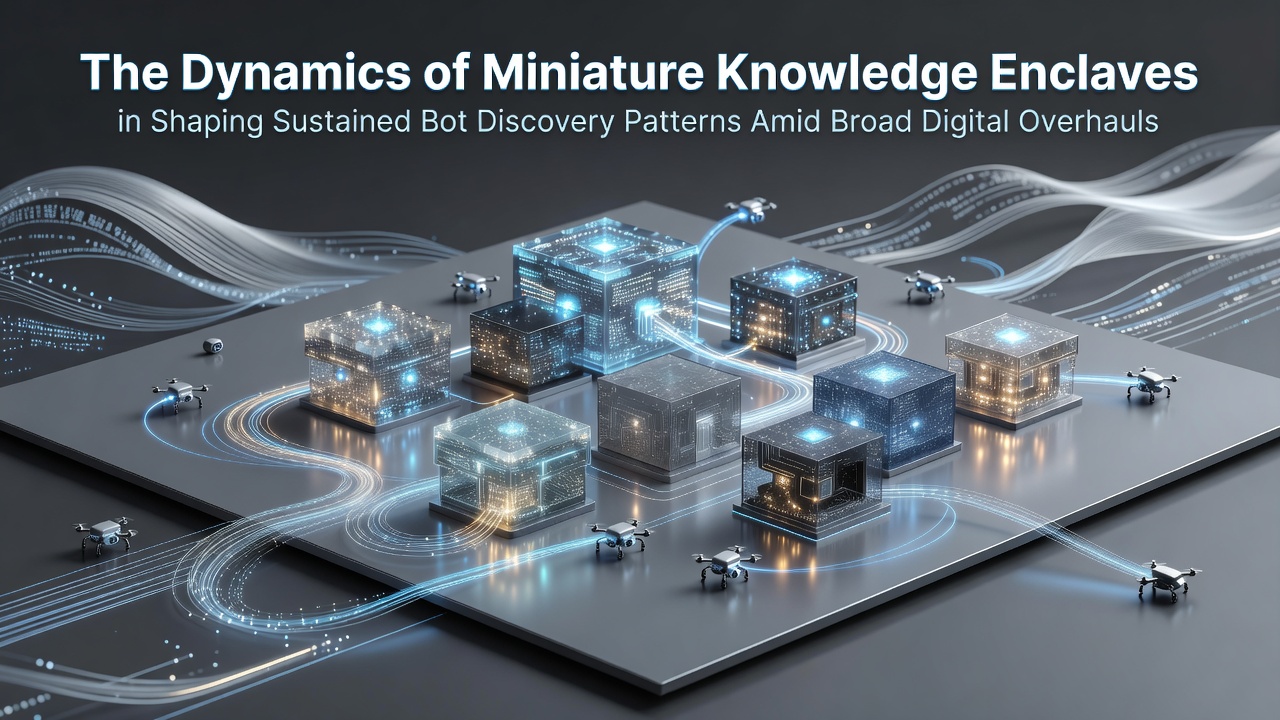
Experts in digital infrastructure describe miniature knowledge enclaves as compact, specialized repositories that organize information into focused clusters within expansive online systems, and these structures have gained attention for their influence on how automated bots sustain content discovery during major platform revisions. Data from network analysis tools indicate that such enclaves create predictable pathways for crawlers by maintaining internal linkages that persist even when broader architectures shift, which becomes particularly relevant as organizations implement updates through late 2026.
Defining Miniature Knowledge Enclaves in Digital Contexts
Observers note that these enclaves typically emerge from modular content arrangements where related data sets receive tight segmentation, often through hierarchical tagging or localized indexing protocols, while the surrounding ecosystem undergoes reorganization. Researchers have documented cases where teams segment knowledge bases into smaller units to support targeted retrieval, and this approach aligns with findings from studies on web graph stability that show reduced fragmentation in discovery logs after such divisions take hold. The process relies on consistent metadata application across nodes, which bots interpret as stable signals for continued traversal.
Bot Discovery Mechanisms and Enclave Influence
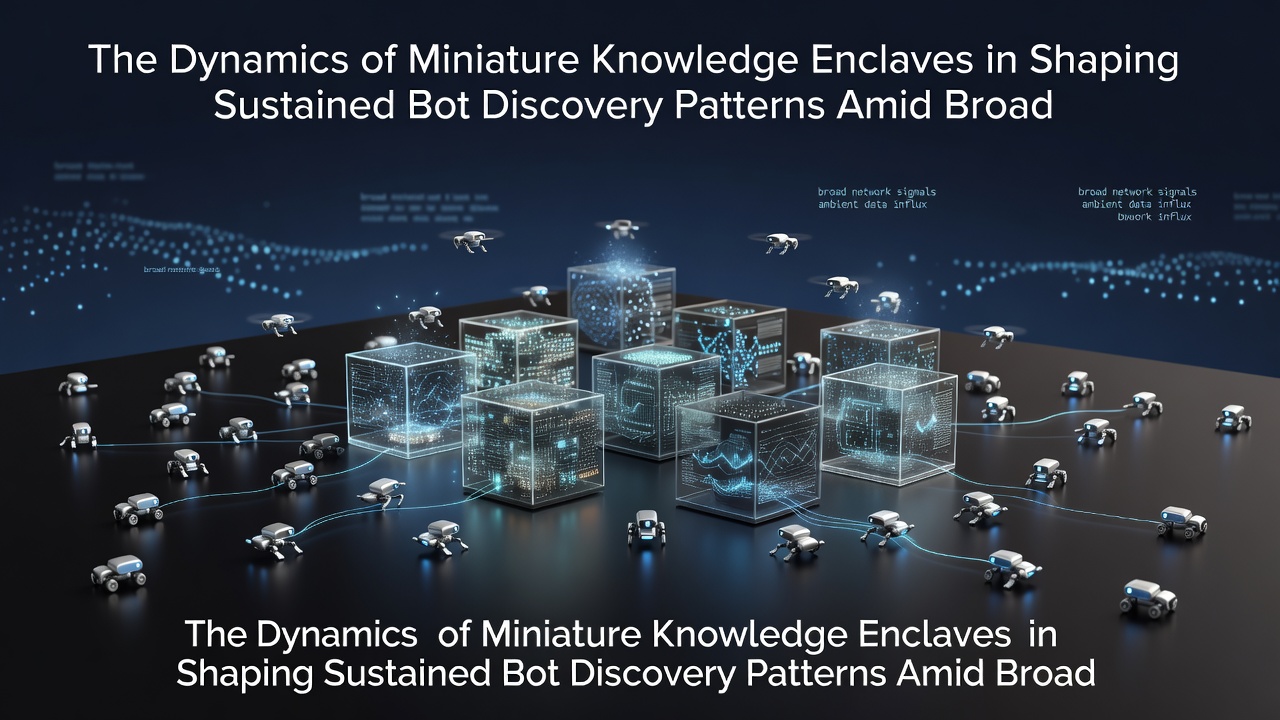
Automated agents, including search engine crawlers and specialized monitoring bots, follow link structures and content signals to map available resources, yet studies on crawler behavior reveal that enclaves enhance pattern sustainability by concentrating authority signals within bounded areas. According to reports compiled by the National Institute of Standards and Technology on digital system resilience, these concentrated zones allow bots to reestablish routes more efficiently following infrastructure modifications because the internal consistency provides reference points that larger, diffuse collections often lack. Patterns observed in server logs demonstrate repeated access to enclave-hosted materials even amid algorithm recalibrations that affect wider site sections.
Responses to Platform-Wide Digital Overhauls
Platform operators have implemented successive overhauls involving artificial intelligence integration and data migration protocols throughout 2025 and into November 2026, and analysts tracking these transitions record that enclaves help preserve discovery continuity where full-site crawls encounter interruptions. Evidence from longitudinal monitoring projects shows bots returning to enclave boundaries at higher frequencies compared to dispersed content areas, since the modular boundaries reduce the impact of external ranking adjustments. Industry analyses from sources such as the IEEE Computer Society highlight how segmentation techniques limit propagation of indexing errors during these periods of change.
One documented example involves enterprise knowledge portals that adopted enclave-style partitioning ahead of a major content delivery network migration, after which crawler activity stabilized within three weeks rather than the six-week average recorded in comparable unpartitioned environments. This outcome stems from the way enclaves isolate update effects, allowing bots to prioritize unchanged internal connections while external layers adapt.
Empirical Observations from Recent Transitions
Figures released by academic research groups at institutions including the University of Toronto indicate measurable increases in sustained bot engagement metrics when enclave density exceeds a threshold of roughly 12 interconnected nodes per cluster. These measurements derive from controlled experiments that simulate overhaul conditions by introducing controlled ranking perturbations and then tracking return visit rates. The data further suggest that discovery persistence correlates with the presence of cross-referenced internal anchors rather than overall site volume.
Additional monitoring conducted across multiple domains during infrastructure evolutions shows reduced variance in crawl frequency inside enclave-defined zones, whereas adjacent non-enclave sections experience wider fluctuations. Such patterns hold across different bot types, from general web indexers to domain-specific data harvesters, because the enclave model supplies repeatable navigation cues that adapt more readily than flat hierarchies.
Conclusion
Research compiled through 2026 continues to map how miniature knowledge enclaves contribute to steady bot discovery by supplying localized stability amid ongoing digital infrastructure revisions, with quantitative records from standards organizations and university studies confirming the linkage between enclave architecture and sustained access patterns. These observations provide measurable benchmarks for systems undergoing similar transitions in subsequent cycles.